Let AI catch renewal risk and ageing queries before they slip through the cracks
A CRM only surfaces what someone thinks to search for. AI that watches quietly in the background can flag what needs attention, before anyone has to go looking.
Some of the most costly problems in an association never get logged anywhere. A renewal risk builds quietly. A CE credit shortfall goes unnoticed until the deadline has already passed. A query sits unanswered for four days because whoever's meant to be chasing it doesn't know it's there, whether that's sitting in a shared inbox, a spreadsheet, or a case note nobody's reopened.
AI that runs quietly in the background can close that gap. Instead of waiting for someone to search a record or ask a question, it watches the signals that already exist in your CRM and case data, and surfaces them to the right person before anyone has to go looking.
In short: most systems wait to be searched. This kind of AI works the other way round, watching for signals that already exist and flagging them before anyone has to ask.
By the end of this, you'll know what proactive AI actually does differently from a chatbot, why ‘nudge, not drive’ matters more than it sounds, and which signals are worth watching first.
What does proactive AI actually mean for a membership team?
It means the AI watches your existing systems in the background and raises a flag when something needs attention, rather than waiting for someone to type a question. A renewal risk, a CE credit shortfall, a lapsed chapter member, a query that's aged past 48 hours unanswered, these are all signals that already exist somewhere in your CRM or case system. The difference is whether anyone notices them in time.
A CRM is only as good as what someone thinks to look for in it. Salespeople tend to keep theirs tidy because their targets depend on it. Almost everyone else in an organisation is less consistent, not because they don't care, but because nobody has time to check every record on the off chance something's changed. Proactive AI flips that: instead of waiting to be searched, it surfaces what's already sitting there.
What is 'nudge, not drive' AI and how is it different from full automation?
Nudge, not drive means the AI surfaces a suggestion to the right person. It never takes the action itself. Full automation would renew the membership or close the case without asking. This approach stops one step earlier: it tells a member of staff what it's noticed, and leaves the judgement call to them.
That distinction matters for trust as much as for control. A member-facing decision, a renewal, a compliance flag, a lapsed relationship, usually benefits from a human making the final call, even when the AI did the noticing. And it only ever works within the permissions you've already set, so the data it watches is used solely to put the right flag in front of the right person, never exposed publicly.
Want to see this before you build anything?
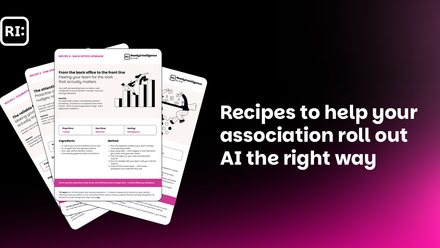
This method is also available as a one-page card you can keep, covering the same approach and what good looks like in practice. Download it free, then carry on reading to see how it plays out in a real workflow.
Which signals are worth watching first?
Start with whichever signal already costs your team the most time to catch manually. Common starting points are renewal risk, CE or CPD shortfalls, lapsed chapter membership, and queries ageing past a set number of days unanswered.
- Do you already track any of these signals today, in a spreadsheet, a shared inbox, or one person's memory?
- How long does it typically take someone to notice one, and does it depend on a specific person happening to spot it?
- What would it actually cost, in a renewal or a relationship, if it was missed entirely?
If the honest answer is that it depends on someone remembering to look, that's exactly the gap this closes.
For most associations, this is staff-facing work: whoever handles renewals, case queries and member records day to day. That makes it a natural fit for your staff assistant, watching the systems your team already uses. The upside still reaches members though: fewer people falling through the cracks supports renewal and retention across your wider membership offer.
We call this a recipe: a specific, repeatable way to put AI to work, not just a good idea. Some call this one the attentive colleague, quietly noticing what a busy team doesn't have time to watch for. It's the third in this series. If you haven't seen the others yet, this piece stands on its own, but it also builds on the same ingredients as the rest of the series.
QUICK RECAP
- Proactive AI watches signals that already exist in your systems and flags them, instead of waiting to be asked.
- It nudges, it doesn't drive: a suggestion goes to the right person, no action is taken without a human reviewing it.
- Renewal risk, CE shortfalls, lapsed memberships and ageing queries are common starting signals. Pick whichever already costs your team the most time to catch manually.
- None of this requires giving up control. A small, private model stays within your own environment, not a shared cloud service.